

Still In
Healing the individual,
building the community.
Still In is a community interest company that supports injured student-athletes by connecting them with a supportive community. It brings together athletes who have recovered from injuries with those who are currently going through the same experience.
Context
Individual Project / 6 months
Methods
Secondary Research / Emotional Journey Graph / Card Sorting Activity / Interview / Market Research
Affinity Maps / Root Cause Analysis / HMW Statements / User Journey Map / Personas / Storyboard
Value Proposition Canvas / Ecosystem Map / Business Model
Tools



PROBLEM
Injury Recovery Without Support: The Reality for UK Student Athletes
In the UK, individual student athletes who aren’t in top-tier “world-class” programs face injury recovery with no structured emotional support, which directly affects their well-being. Without this support, many lose confidence and even stop competing.
Told by an Olympic swimmer during the interviews:
“It’s hard to keep going when you feel like you’re not good enough for them to invest in you.”

67% of student athletes in the UK experience at least one injury during their career (NIH).

Athletes outside world-class programmes recover alone, especially in individual sports like tennis and athletics.

Unsupported athletes are twice as likely to lose motivation, struggle mentally, or drop out entirely.
SOLUTION
Still In: Turning Injury Into Connection.
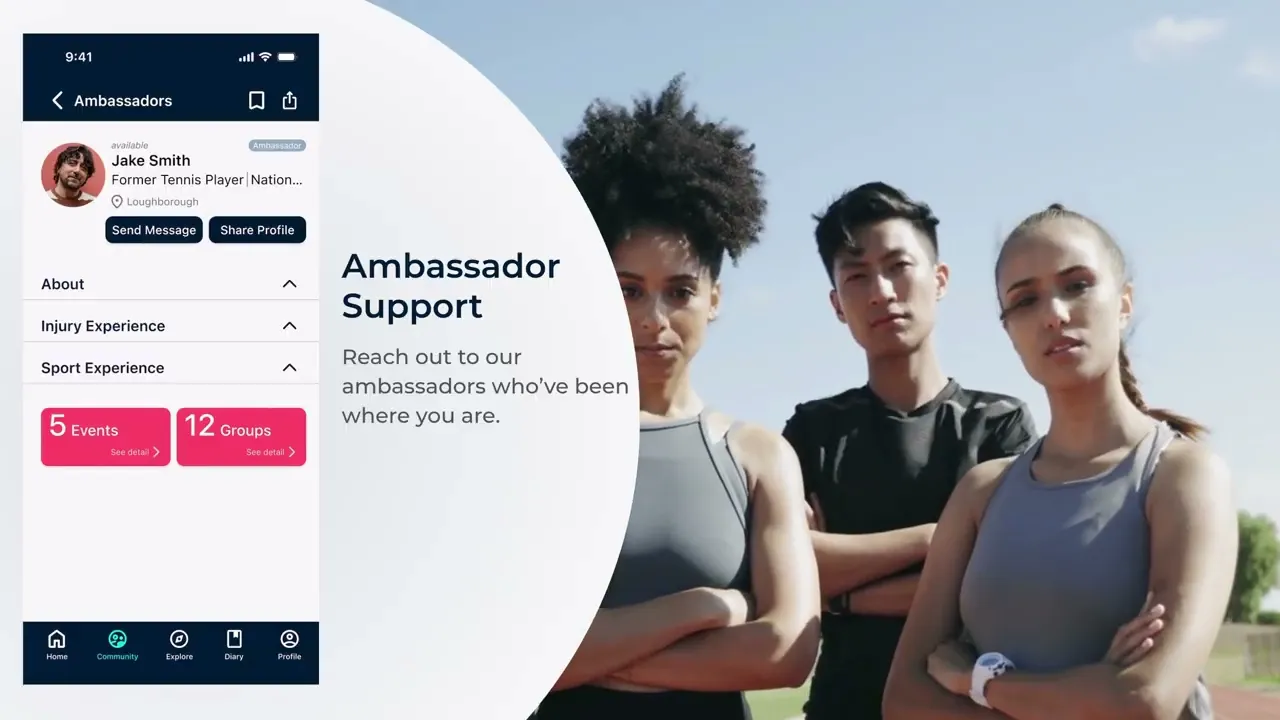
Still In is a community interest company that connects former individual athletes (ambassadors) who have experienced injuries with those currently in recovery. It creates a supportive space for elite athletes outside team sports, providing easy access to peers, emotional support, and a way to overcome isolation.
Still In Core Pillars

#1 SENSE OF BELONGING & CONNECTION
Connection with Peers During Recovery Is Key
Join groups and events tailored to your recovery stage.
Create your own group to connect with people who share the same experience.
#2 RECOVERY & RESILIENCE
Tailored Peer and Professional Support
Reach out to ambassadors who have experienced similar injuries.
Attend the ambassadors’ events to connect in person with like-minded people.
Book sessions with sports psychologists tailored to your injury and sport type.


#3 SELF-EMPOWERMENT & WELL-BEING
Track, Reflect, and Unlock Your Support Pack
Track your recovery journey and reflect on your progress.
Share your diary with peers and your coach.
Earn rewards from partners for each weekly streak.
Receive a recovery support pack with a personal letter from your coach or an ambassador.
How Does the Service Work?
To ensure this concept is scalable and user-centred, I developed a set of strategic tools.
Through the ecosystem map, I explored ways to create value for users through different collaborations and partnerships.
With the business model, I created the budget list and revenue streams to make the service sustainable.
I designed subscription plans to ensure continuity of the service.
Finally, I considered unintended outcomes and future steps to make the service realistic and adaptable in the long run.


Expected Impact
Reduce isolation for the 60–70% of injured individual student athletes who currently recover alone.
Decrease mental-health risks, which are twice as likely when injuries are unsupported.
Keep elite talent, who are twice as likely to drop out when they are deemed insufficient by world-class programmes.
Validation
Workshops with 15 participants confirmed the emotional gap in recovery support.
85% expressed interest in joining a tailored recovery community or peer-to-peer system.
Interviews with sport psychologists, coaches, and former/current elite athletes emphasised the gap in emotional support for individual athletes' injury recovery.
Broader Potential
Universities partnering with Still In can make their mental-health support more visible and accessible, improving trust and wellbeing outcomes.
Organisations such as UK Sport and Sport England can strengthen their mission of holistic athlete support by aligning with the service.
Local businesses can benefit from reward partnerships, gaining visibility through the platform.
PROCESS
MY APPROACH
I Iterated 3 Times Based on Testing with the Key Stakeholders
I followed the Double Diamond methodology combined with an iterative approach. I iterated 3 times in total based on testing with the key stakeholders and my peers.

DISCOVERY - 1.0 Research
THE TOPIC
Investigating the Experiences of Competitive Athletes
The topic was intentionally chosen broadly, allowing me to explore different areas and uncover real challenges through first-hand research.
SECONDARY RESEARCH
Challenges of Student Elite Athletes in the UK
I conducted secondary research to explore existing studies on athlete well-being and challenges for shaping interview questions accordingly.
As I was studying at Loughborough University, a school well-known for its success in sports, my focus shifted towards student elite athletes.
Identified Key Challenge Areas for Student Elite Athletes
SEMI-STRUCTURED INTERVIEWS
Conducted 12 Interviews: Olympic Athletes to Regional Players
I conducted interviews to test whether the issues found in secondary research were also perceived as problems by athletes themselves.
I spoke with athletes from various countries, coaches, and support staff at Loughborough University, both in person and online.


Pictures from Interviews
EMOTIONAL JOURNEY GRAPH
Athletes’ Emotional Highs and Lows: The Role of Success
I created this method to understand the emotional ups and downs of athletes and what influences these emotional states.
To explore the link between success and emotional state, I asked them to mark when they felt successful in that journey.


Emotional Journey Graph Activity Template
Emotional Journey Graph Activity with Participant 8
CARD SORTING ACTIVITY
What Matters Most in an Athlete’s Journey?
I reframe this method to identify the most and least influential people, coping strategies, and motivation factors in the athletes' sport journey.
I gave participants cards with roles, strategies in coping with challenges, and motivation factors to rank them from least to most influential based on:


Card Sorting Activity Template
Card Sorting Activity with Participant 12
Primary Research Summary
12
Interviews
6
Emotional Journey Activity
5
Card Sorting Activity
2.0 Analysis
Broad Start & Narrowing Down
I analysed interview transcripts to identify emotional triggers, pain points, and key insights.
Using an affinity diagram, I organised the findings by participant type (athlete, coach, mentor) and observed distinct patterns between individual and team sport athletes.
The Outcome
The emotional and structural gaps in individual sports revealed through patterns led me to focus on individual athletes.

Affinity Diagram of Individual Athletes
Root Cause Analysis of the Insights
I used the laddering technique (asking 'Why?' question) to uncover the root causes behind each insight.
The Outcome
After identifying the root causes, I realised they are linked in some way and impact each other. So, before prioritising them I mapped out how they relate to one another

Relationship Diagram of Root Causes
Time to Zoom Out, Ecosystem Map
Based on my research, I created an ecosystem map of student-athletes outside world-class programs in the UK to clearly identify support gaps.

Ecosystem Map of Second Tier Student Athletes' Support Services in the UK
DEFINE
Prioritised Insights
1- Limited Support Services
Athletes not at the required performance level often feel inadequate or less valued due to having limited access to support services and not being funded enough.
2- Isolation During Recovery
Athletes not in the performance team often rely on personal networks for support, making the injury process feel lonelier.
3- Staying Motivated is Hard
Athletes need reminders of their goals to stay motivated during challenging times like injury.
4- Peer Connection Helps Coping
Athletes, during injuries, tend to seek advice from their peers who have experienced similar injuries, as it is easier to relate and reduces the uncertainty of the situation.
5- Coach Support Matters
Being remembered and supported by their coaches, even after poor performances, makes athletes feel valued and emotionally safe.
VISION STATEMENT
MARKET RESEARCH
Positioning My Vision on the Market: No Tailored Support for Injured Individual Athletes
Existing services fail to connect individual athletes with experienced peers overall, which matters most during injury.


DEVELOP - 3.0 Ideation
Creating the Proto-Persona
It is created based on the emotional journey graph activities I conducted with individual athletes, as they helped me explore athletes’ pain points in depth during their injury periods.

USER NEED STATEMENT
HMW Make Individual Athletes Feel...
I created an existing user journey map of Emma (injured individual athletes) to visualise the pain points clearly.
From these pain points, I generated How Might We statements, which were then prioritised using an impact-feasibility matrix and reduced into three statements.

Existing Journey of an Injured Individual Athlete
Injury Stage
Recovery Stage
Creating the Concept
I started ideation using the Fantastic 5 method, as it enabled me to come up with more creative ideas.
I used storyboards to communicate ideas visually and began defining roles and structures. This then guides me to find ways to create value for these roles through the value proposition canvas. And I continue to explore opportunities through the ecosystem map in terms of creating value.


4.0 Concept Testing & Iterations
First Iteration: Testing with Peers
First Iteration
After peer testing, I decided to introduce my service after athletes find a physio, ensuring focused and tailored emotional support during recovery.
The Roles
The Storyboard of Emma- Initial Concept

Deciding on the Feature Set
I ideated features based on the first iteration and tested them with peers.
I asked peers to think like injured athletes and identify what mattered most to them.
I used insights from testing to inform the user experience line of the prioritisation matrix.


Feature Prioritisation Activity with My Peers
Feature Prioritisation Matrix
Revised Prototypes for Testing

Storyboard
Created for testing with primary users: Individual elite athletes.
Email Drafts
Created for testing with coaches and sport psychologists to understand their interests and motivations


User-Specific Interface: Coaches
Created for testing the interaction between the coaches and elite athletes through the app.
Second Iteration: Testing with Key Stakeholders
I tested my concept with sport psychology students and a startup lab.
Second Iteration
The revised the roles:
Mentors became ambassadors with limited 1-on-1 text interaction.
Only former and current athletes who experienced injuries can become ambassadors.
Groups and events are classified by recovery level.
Sport psychologists are included for professional support if needed.

“Even with training, I’m not sure it’s entirely ethical or safe. This should be done by experienced people.”
“The recovery level matters. It could be athletes who are in rehab and are doing recovery so that they can come back to this sport.”
“You need to be 100% sure on the type of advice/guidance and sessions you can put on from a legal point of view.”
Third Iteration: Testing with Coaches & Lifestyle Mentors
Third Iteration
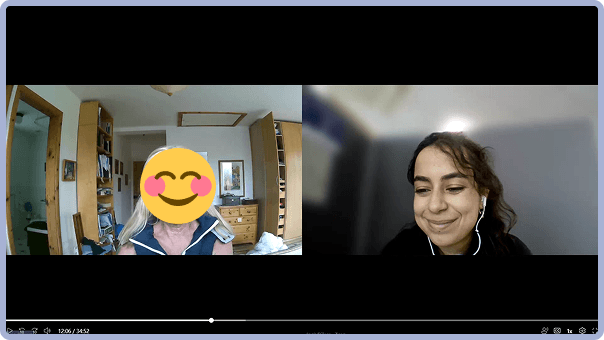
Considering the coaches' busy lifestyles, I decided to reach out to them only to request letters for the support pack to provide athletes with a sense of personal support.

“If it won’t take a lot of time, then yeah, maybe I can do it.”
“I am not sure how much energy they will have to follow up.”
I Iterated 3 Times After Testing with Key Stakeholders
5.0 Usability Testing
Low-Fidelity Wireframes



Usability Testing
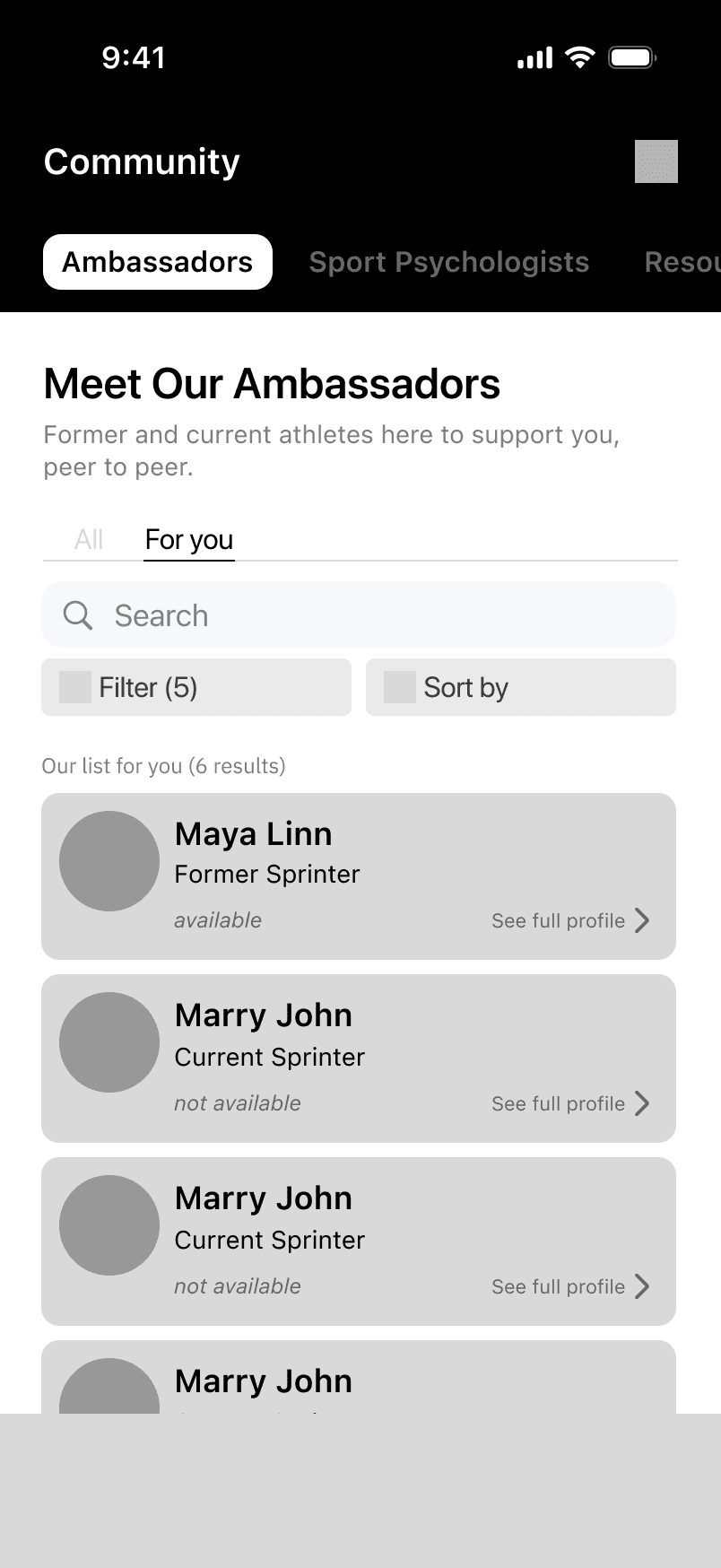
I tested my low-fi prototypes and flows with my peers and primary users to ensure their usability.

DELIVER - 6.0 Final Design
Site Map

Onboarding Flow
Just fill in your sport type, injury level, and select the kind of support you need, and we’ll create a tailored experience for you, without the need to search manually.

Event Booking Flow
Easily book the events recommended to you based on your onboarding preferences. When you feel ready, create your own group and organise in-person or online events to connect with others.

Design System
The colour palette balances energy, clarity, and emotional support. Each colour was chosen for both emotional impact and strong visual contrast. All combinations were tested against WCAG standards using the A11y Contrast Checker in Figma to ensure accessibility for users with visual impairments.

Final UI
The final design brings together all touchpoints of the Still In experience. The interface makes it easy for athletes to access tailored support, stay motivated, reflect on their journey and feel part of a caring community throughout recovery.


Home
Community
Explore


Diary
Profile


REFLECTION
Limitations
Difficult to reach primary users due to the summer holidays
What I’d Do Differently
Engage stakeholders earlier, not wait for full prototypes
Approach representatives in person, not just emails/calls
Use professional contacts sooner for timely feedback
Avoid perfectionism in testing, embrace early feedback
Mindset Change
I become more open to iteration
I become confident handling major design shifts under time pressure
I understand the importance of testing with real users